Regenerative agriculture in the almond sector
In recent years, a model has emerged that goes beyond sustainability in the almond sector: regenerative agriculture.



The almond industry, due to its importance, tradition, and future prospects, deserves to be told from the inside. And there is no better way to do this than with the help of true experts in the sector.
Today we begin a series of interviews in which we will talk to several scientists from the CEBAS-CISC research center who specialize in different areas related to almond production. Manuel Rubio, who works in the area of disease resistance in fruit species, has spoken to us in depth about the factors that affect the obtaining of certificates and guarantees in almond tree planting.
Obtaining certified varieties in our country is a long and complex process. Currently, CEBAS is one of the few institutions with the capacity to obtain and produce certified plants. The process is fully controlled by the plant health services of each Autonomous Community in Spain, as well as by the Ministry of Agriculture.
In our case, this process began a few years ago and basically consists of guaranteeing the authenticity of the plant material along with its phytosanitary cleanliness; that is, that it is free of fungi, bacteria, or viruses. Furthermore, as I mentioned, this process is controlled by the autonomous communities, which audit it from start to finish: they take the plant, analyze it, and when everything is in order, they come and place small blue labels that indicate that you are now authorized to deliver certified material.
If a plant nursery or farmer wants certified plants for future planting, they must contact us. Through our CEBASfruit® platform, we provide the plant material to the Autonomous Community (in our case, the Region of Murcia, where we are located), which collects the material, seals it, and delivers it to the nursery. If we are in our Community, it is the Community that passes it on directly, but in the case of, for example, the Valencian Community, it is the Community that receives the material, and they deliver it to the nursery or producer who wants to graft that plant or obtain it. Subsequently, they certify that this process has been fully controlled throughout and with the relevant traceability.
Currently, at CEBAS and at this facility, we are able to offer farmers and nursery growers seven certified almond varieties: Antoñeta, Marta, Penta, Tardona, Makako, and the new Florida and Alaska varieties, which are soft-shelled.
The importance of having certified plants stems mainly from two things: having plants that are healthy and free from pathogens and diseases, which makes the potential of our variety useful in the medium to long term. Having disease-free plants helps us to produce and successfully establish a new plantation, provided that it is managed properly and you have water and favorable weather conditions. Even if a plant is certified, we are never immune to the possibility of a locust plague coming and eating it, for example.
What this means is that if you can guarantee that you don’t have any diseases to begin with, you’ve already won half the battle, because you’ll be able to grow a healthy plant in two or three years that will start producing earlier, which will make it easier for you to have higher-quality harvests in the medium to long term.
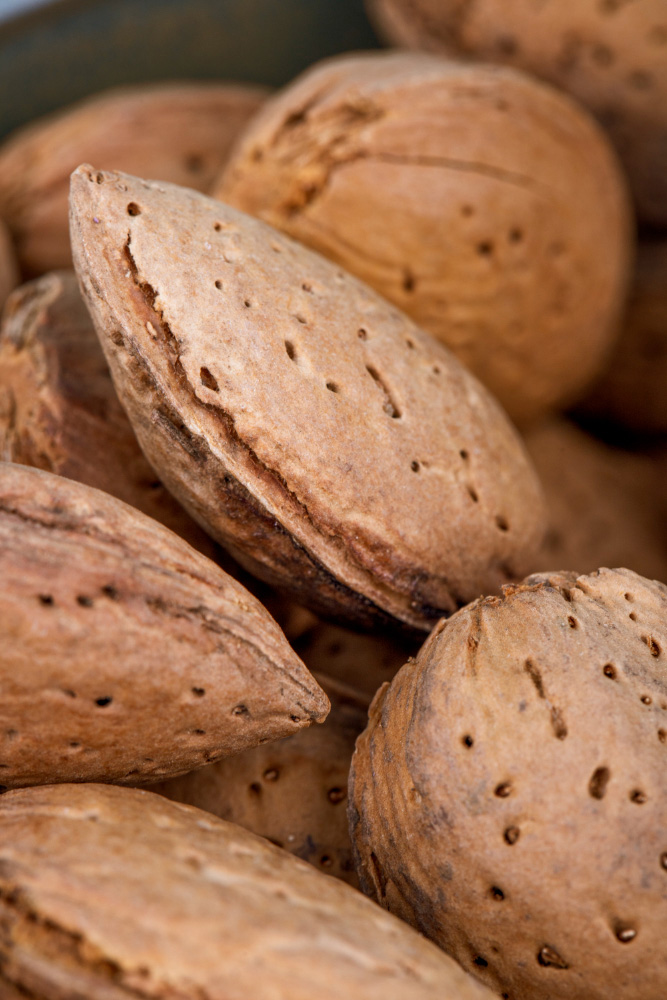
When it comes to the importance of the origin of plant material, we often fail to consider how important it is to know what you are buying when you purchase a plant. Often, you place your complete trust in the nursery and buy the plant material you want, for example, the Penta variety. You buy Penta, but the problem is that you won’t know you have that variety until three years later.
Let’s say you have the Penta variety, but in the third year it starts to flower and a frost destroys it, but an early frost (Penta is a very late flowering variety). Then you may begin to suspect that what you have been sold does not correspond to the variety you wanted to purchase.
Similarly, now that self-compatible varieties are used (meaning they do not require pollination, in agricultural jargon), what can happen in this situation is that you purchase a variety you fully trust and plant a single variety, but when the time comes, one year you have no harvest; another year comes and again you have no harvest. This could be linked to the fact that the plant you bought was not sold to you properly.
Thus, the second point covered by plant material certification, in this case for almond trees, allows us to know that what we are buying is what we want. Another important aspect is that it is a way of controlling—although nurseries often dislike this—the propagation of protected plant material and preventing its uncontrolled dissemination.
If you prefer to watch the interview in video format, you can find it on our YouTube channel: