Introducing our new visual identity
Discover our new visual identity, a redesign that celebrates 80 years of history with a more contemporary, versatile and authentic image that remains true to our origins.


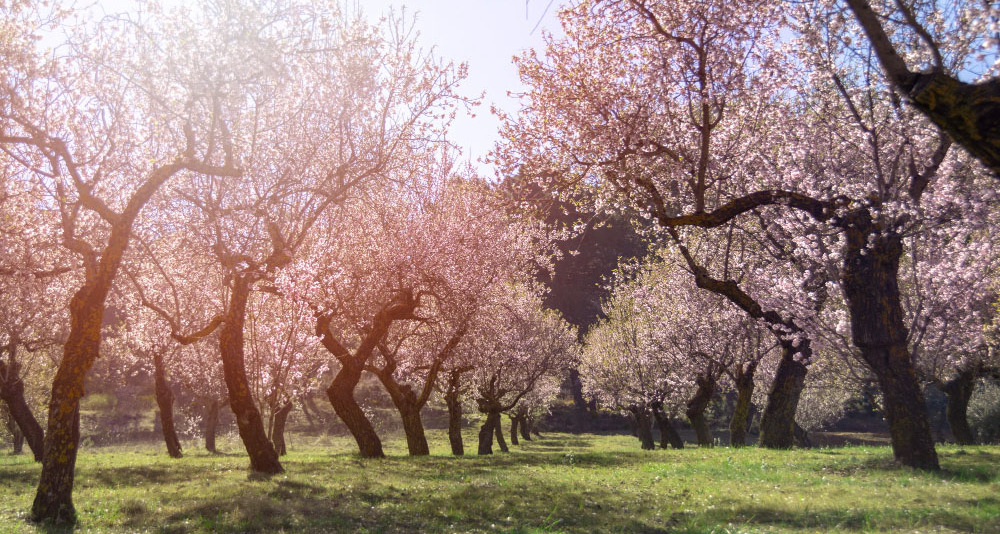
At a time when climate change, water scarcity and soil degradation pose major challenges to the agricultural sector in general and the almond sector in particular, a model that goes beyond sustainability is emerging strongly: regenerative agriculture.
This approach not only seeks to reduce environmental impact, but also to actively improve ecosystem health, regenerate soils, and promote more resilient agricultural production.
Regenerative agriculture is an agricultural production system based on restoring natural resources instead of depleting them.
Regenerative agriculture is an agricultural production system based on restoring natural resources rather than depleting them. Unlike other models focused on sustainability or efficiency, regenerative agriculture prioritizes revitalizing the soil, increasing biodiversity, sequestering atmospheric carbon, and strengthening ecosystem balance.
It is not about applying a single technique, but about combining practices that adapt to the local context and seek to create living, dynamic and balanced agricultural systems.

The benefits of regenerative agriculture are numerous and encompass environmental, social, and economic aspects:
Almond cultivation, traditional in many Mediterranean regions, faces significant challenges: depleted soils, water scarcity, erosion, and loss of biodiversity. However, almond trees are also resilient and adaptable, making them ideal for inclusion in regenerative systems.
These are some specific practices that can be applied in almond plantations under regenerative principles:
Maintaining a plant cover between the rows of almond trees helps protect the soil from erosion, improves its structure, and promotes microbial activity. It also helps fix nitrogen and attract beneficial insects.
Minimizing or eliminating plowing prevents the disruption of the soil structure and allows for the conservation of its moisture, which is key in arid climates.
The use of compost and natural fertilizers nourishes the soil in a balanced way and improves its water retention capacity.
Including other plant species or hedges among the almond trees promotes biodiversity and reduces the risk of pests, creating a more self-sufficient ecosystem.
Localized irrigation and the use of humidity sensors allow you to make the most of every drop, adapting to the actual availability of the resource.
Integrating a regenerative agriculture approach not only means striving for a superior product, but also aligning our values with those of today’s consumer. Regenerative agriculture represents a necessary evolution in the agricultural production model, especially for crops like almonds.
It is not just about preserving what already exists, but about regenerating and restoring life to the soil and the landscape. For Manolet Almonds, adopting the principles of regenerative agriculture is not only a response to environmental challenges, but an opportunity to be at the forefront of a positive, necessary and lasting change.
Discover our new visual identity, a redesign that celebrates 80 years of history with a more contemporary, versatile and authentic image that remains true to our origins.